

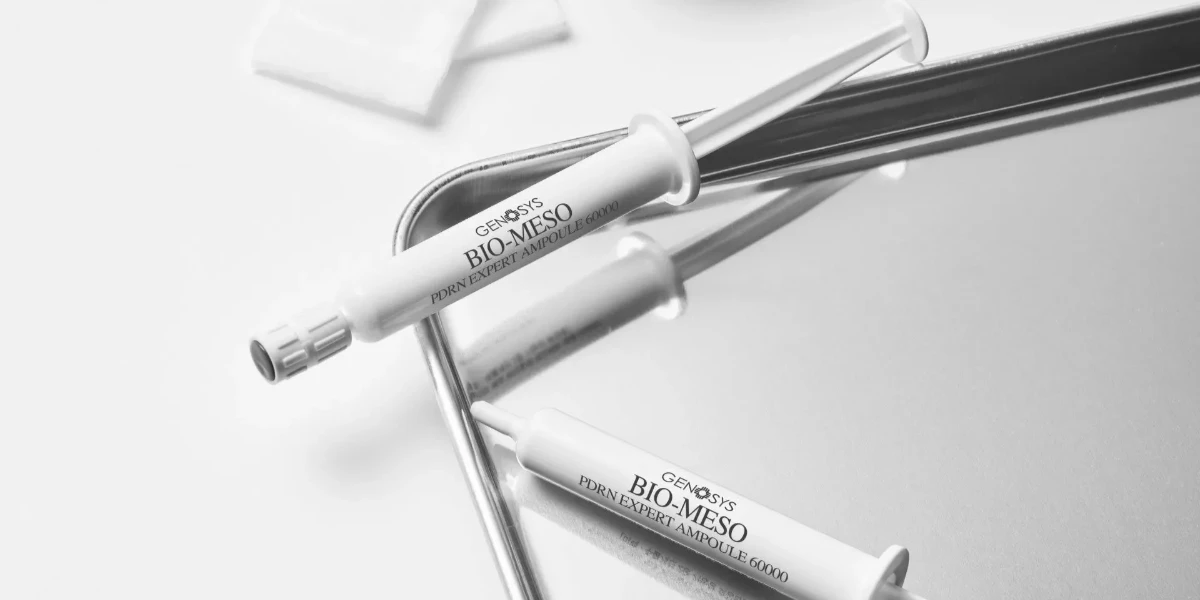
Spicules act like microscopic “conductors”: they create ultra-fine channels that temporarily change the skin’s permeability and sensations. PDRN, which dermatologists associate with tissue-regeneration signaling, stands out because it focuses not on an instant effect, but on the quality of the skin’s recovery.
The anatomy of spicules and how they work in the skin
Spicules are microneedle-like structures (most often silica from marine sponges) with a sharp, porous “spike” profile. Their length and diameter depend on the raw material and processing, but in cosmetics the goal is fractions that mechanically create controlled micro-irritation at the level of the stratum corneum. Dermatologists compare this effect to a very superficial microneedle stimulus: it doesn’t so much “pierce” the skin as create a dense network of microchannels and activate a neurosensory response.
When rubbed into the skin, spicules act as micromechanical stimulators: they temporarily increase transepidermal water loss, activate keratinocyte proliferation signals, and promote accelerated desquamation (shedding of corneocytes). At the same time, the microchannels alter the diffusion pathway for active ingredients, and the inflammatory micro-cascade (release of cytokines and growth factors) can create a “repair” environment that some experts link to a faster response in texture and pigmentation irregularities.
How do spicules change the skin barrier and the penetration of actives?
Spicules briefly “reprogram” the stratum corneum: instead of a continuous lipid–corneocyte structure, a network of microchannels and microfissures appears, increasing transepidermal water loss (TEWL) and reducing diffusion resistance. This is not deep puncturing like medical microneedling, but it’s enough that for several hours up to 1–3 days (depending on the fraction, rubbing intensity, and skin condition) the barrier is more “open” to both water and smaller, soluble molecules.
Because of this temporary weakening of the barrier, the pharmacokinetics of actives in the skin also change: their delivery into the epidermis increases, but so does the risk of irritation (especially from acids, retinoids, and fragrance). Formulators often choose soothing, isotonic bases and higher–molecular-weight humectants, and dermatologists emphasize a “window” for safer penetration enhancement—when actives are selected according to skin reactivity and the speed of barrier recovery.
The biology of PDRN and why it is considered a regeneration signal
PDRN (polydeoxyribonucleotides) is a biopolymer made up of DNA fragments, associated in cosmetics and aesthetic medicine with modulating the tissue response to injury. The literature often highlights its link to activation of adenosine A2A receptors, which may steer the inflammatory cascade toward a more “repair” profile: fewer pro-inflammatory mediators, more signals related to fibroblast activity and extracellular matrix synthesis. Because of this, PDRN is often described as a “regeneration signal”—not as a direct collagen substitute, but as a biochemical prompt for cells to reorganize.
It’s important to separate marketing language from biology: PDRN is not one single “miracle” pathway, but rather the sum of several mechanisms (nucleotide supply, receptor signaling, changes in the microenvironment). Dermatologists emphasize that results depend most on formula stability, concentration, delivery method, and barrier condition—signals may be stronger in compromised skin, but the risk of sensitivity also increases.
Does the PDRN and spicules combination work better than retinol or acids?
The spicules and PDRN combination often works on a different principle than retinol or AHA/BHA: instead of long-term receptor regulation or chemical exfoliation, you get a mechanical “permeability window” along with biochemical modulation of the response. In practice, this may mean faster texture smoothing and a “post-procedure” type renewal feel, especially when PDRN is used as a soothing, repair-supporting signal. Some dermatologists view this duo as a smart strategy for more sensitive skin that struggles to tolerate retinoids, yet still seeks a renewal boost.
Still, “better” is not universal. Retinoids have the strongest evidence base for acne, photoaging, and pigmentation, while acids precisely target corneodesmosomes and sebum channels. Spicules + PDRN may be superior for short-term reduction of roughness, the look of pores, and dullness, but they also raise the risk of irritation if paired with acids or retinol in the same week. The optimal choice depends on tolerance, goals, and whether the priority is speed or a predictable long-term result.
Who is this technology for, and when is it better to avoid it?
Spicules + PDRN are most often chosen when the goal is rapid reduction of roughness and “dullness,” especially with a thickened stratum corneum, uneven texture, comedones, or post-acne. In clinical practice, this combination is often seen as a compromise between a “procedure-like” effect and barrier support: spicules create a short permeability window, and PDRN may help steer the response toward repair (less lingering redness, faster return of comfort). For more sensitive skin, this can sometimes become an alternative when retinoids trigger flaking or dermatitis.
It’s best avoided with active inflammation (a rosacea flare, active acne with pustules), a compromised barrier, perioral dermatitis, after intense sun exposure, or when using systemic retinoids. Dermatologists also warn of a higher risk of post-inflammatory hyperpigmentation in darker phototypes if the procedure is done too frequently or too aggressively. If the skin has microdamage, spicules can intensify stinging and “lock in” irritation for several days, so it’s safer to choose a gentler regimen or postpone.
How to safely add spicules and pdrn into a routine at home and in the clinic
In an at-home routine, treat spicules as a “procedure” step: start with once every 10–14 days, assessing how long stinging lasts, erythema, and signs of elevated TEWL (tightness, flaking). Dermatologists often recommend not doubling up in the same week with retinoids, AHA/BHA, benzoyl peroxide, or strongly fragranced products, because microchannels increase not only penetration but also the likelihood of irritation. After spicules, choose a barrier-supporting scheme: a gentle cleanser, ceramides, blends of cholesterol and fatty acids, and keep the active to PDRN (as a repair signal) or panthenol.
In the clinic, safety depends most on protocol discipline: clear indication selection, phototype assessment for PIH risk, and strict time-based “separation of actives.” In practice, PDRN is often used as post-stimulation support after a mechanical stimulus (spicules, microneedling), but only when there is no active dermatitis or infection. If you have questions about compatibility with your therapeutic regimen (e.g., prescription retinoids), the safest approach is to coordinate the plan with a dermatologist.
The practical “strength” of this pairing lies not only in the promise of faster renewal, but in the ability to precisely manage two variables: the barrier’s permeability window and the direction of the inflammatory micro-response. Spicules provide a mechanical impulse and temporarily shift penetration dynamics, while PDRN may help maintain a reparative profile (especially when the post-procedure routine is focused on lipid replenishment and minimizing irritants). Even so, dermatologists continually remind us that this is not a “for everyone, always” alternative to retinoids or acids: safety and predictability depend on phototype, control of active inflammation, frequency, and how rigorously stronger actives are kept separate. If the question is whether your skin needs a faster “procedure-like” effect or a slower but stable long-term strategy, it’s worth choosing not the trendiest technology, but the one that best matches your tolerance and the speed of your barrier recovery.