

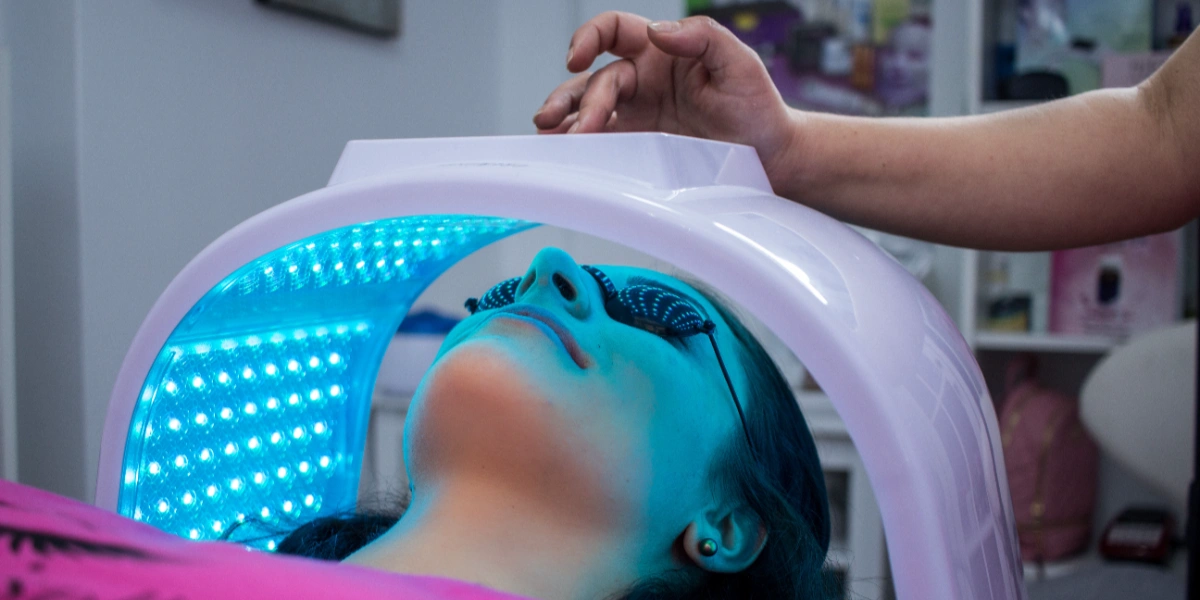
Blue light therapy acts not on the skin’s surface appearance, but on specific biological processes: bacterial activity, sebaceous gland responses, and inflammatory signals. In dermatology, it is valued for its targeted effect on acne, but results depend on wavelength, treatment frequency, and the condition of the skin.
How Does Blue Light Affect Cutibacterium acnes?
In the context of acne, blue light targets not the skin’s “oiliness” itself, but the metabolism of Cutibacterium acnes. These bacteria naturally produce porphyrins — light-sensitive molecules that absorb light at a wavelength of approximately 405–420 nm. After absorbing energy, reactive oxygen species are formed, damaging bacterial membranes and reducing their activity within the follicle.
Dermatologists consider blue light a more selective method than broad-spectrum antiseptics because it acts more specifically on porphyrin-containing bacteria rather than the entire skin microbiome. However, C. acnes is not simply a “bad” microorganism — it plays a role in the skin ecosystem, so the goal is not complete eradication. Clinically, the most important objective is to reduce the bacterial inflammatory stimulus in the pores, especially when comedones progress into red papules or pustules.
Wavelength, Dose, and Skin Response
The effect of blue light on acne is most strongly associated with the 405–420 nm spectrum, because this is the range in which C. acnes porphyrins absorb energy most efficiently. Shorter-wavelength blue light acts more superficially than red light, so its target is usually the upper part of the follicle and inflammatory lesions closer to the epidermis. In dermatological practice, this is important: intensity that is too weak may amount to merely cosmetic illumination, while overly aggressive exposure increases the risk of irritation, dryness, or temporary erythema.
Dose is assessed not only by treatment duration. Energy density (J/cm²), distance from the skin, stability of the light source, and session frequency all matter. The skin also responds individually: lighter phototypes are more prone to redness, sensitive skin or skin with an impaired barrier may sting, and in darker phototypes it is important to monitor the risk of post-inflammatory hyperpigmentation. For this reason, clinical LED systems are generally evaluated more cautiously than home devices, whose actual dose is not always clear.
Is Blue Light Therapy Suitable for All Types of Acne?
Blue light is best suited for mild to moderate inflammatory acne, where papules and pustules predominate. In such cases, reducing C. acnes activity may decrease the intensity of inflammation and the number of new red breakouts. Dermatologists often view it as an adjunctive method, especially for patients who do not tolerate benzoyl peroxide, retinoids, or antibiotics. However, for comedonal acne, where clogged pores without pronounced inflammation dominate, blue light generally has a weaker effect because it does not dissolve keratin plugs and does not directly regulate follicular keratinization.
Cystic or nodular acne requires more cautious assessment. Deep inflammatory nodules lie too deep for superficial blue light to reach the main process, so LED treatments alone are often insufficient. Hormonal acne, associated with androgen effects and excess sebum, also requires a broader strategy. It is important to distinguish when light is a useful support and when delaying medical treatment may increase the risk of scarring.
Inflammation, Sebum, and Sebaceous Gland Responses
Blue light can reduce the inflammatory signal in the follicle, but its effect on sebum production is not as direct as that of hormonal or retinoid-based treatments. When C. acnes activity is suppressed, porphyrin-induced oxidative stress and immune system irritation decrease, so papules may become less red and pustules may calm more quickly. Dermatologists often emphasize that this is more a matter of inflammation modulation than “switching off” the sebaceous glands.
Sebaceous glands respond to androgens, inflammatory mediators, and the condition of the skin barrier, so blue light alone rarely solves the problem of shine or persistently clogged pores. If sebum is thick and the follicular opening is prone to keratinization, keratolytics or retinoids are needed. Nevertheless, for patients whose skin is sensitive and easily irritated, LED treatments can be a useful part of a lower-irritation strategy, especially when combined with gentle cleansing and non-comedogenic moisturization.
How Does Blue Light Differ from Topical Acne Treatments?
Blue light works through a photochemical mechanism, while topical products act through chemical effects on the skin surface and follicle. Benzoyl peroxide oxidizes bacteria and reduces the risk of antibiotic resistance, retinoids normalize keratinization, and azelaic acid suppresses inflammation and hyperpigmentation. LED therapy is more specifically directed at C. acnes porphyrins, so it often causes less dryness and less disruption to the skin barrier.
The difference is also visible in the treatment rhythm. Creams work daily, gradually changing the follicular environment, while blue light treatments provide a pulsed effect that depends on dose and regularity. Dermatologists often combine both methods: light reduces the activity of inflammatory breakouts, while topical preparations control comedones, sebum oxidation, and relapses. This combination is especially useful when effectiveness is needed without excessive irritation.
Safety, Treatment Frequency, and Realistic Expectations for Results
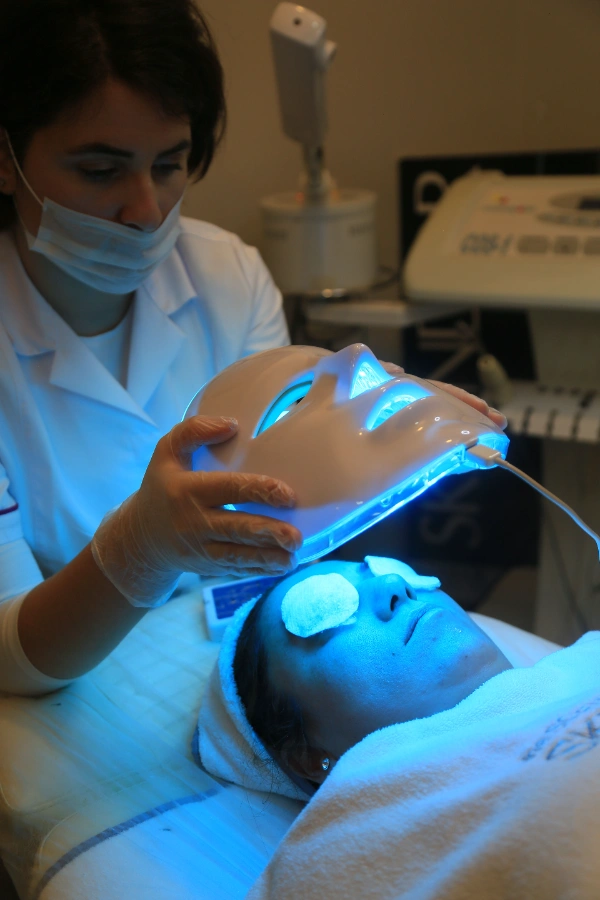
Blue light therapy is considered safe when the proper dose is used and the eyes are protected, because the 405–420 nm spectrum can irritate the retina. The most common adverse effects are temporary redness, dryness, a feeling of tightness, or mild stinging. Dermatologists evaluate treatments more cautiously in patients taking photosensitizing medications (e.g., certain antibiotics, isotretinoin, or retinoids), as well as in those with conditions that increase photosensitivity.
Treatment frequency depends on the power of the device: in a clinic, 1–2 sessions per week are often used for several weeks, while home LED masks require a longer but gentler regimen. The first changes are usually assessed after 4–8 weeks, not after a few days. A realistic goal is fewer inflammatory breakouts and calmer skin, not the complete disappearance of acne. If painful nodules, scarring, or rapid worsening occur, LED should not replace treatment prescribed by a dermatologist.
Blue light can be a valuable part of acne control when its capabilities are assessed realistically: it suppresses C. acnes activity and the inflammatory response, but it does not replace measures that regulate keratinization, sebum, or hormonal factors. The best results are most often achieved when LED treatments are combined with a clear skincare strategy, an appropriate dose, and dermatological evaluation, especially if acne is deep, painful, or prone to leaving scars.