

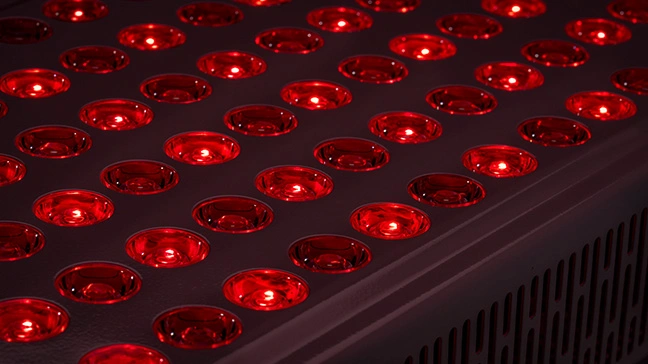
Red light therapy acts on cellular energy metabolism, especially mitochondrial activity, which is why it is of interest to dermatologists, sports medicine specialists, and rehabilitation experts. The right wavelength, dose, and frequency of use determine whether the procedure will deliver measurable benefits or remain merely an expensive gadget.
How Red Light Affects Mitochondria and Cellular Signals
The effect of red light is most often associated with the mitochondrial enzyme cytochrome c oxidase, which is involved in the electron transport chain. When photons reach the cell, they can alter the activity of this enzyme, which is linked to more efficient ATP production. Biophysics researchers, including Michael Hamblin, emphasize that the effect is not a simple “energy boost”: light functions as a biological signal that changes the cell’s response to stress.
An important part involves changes in nitric oxide and reactive oxygen species. A small oxidative stimulus can activate transcription factors associated with inflammation control, tissue repair, and antioxidant systems. This explains why the dose has a narrow window: too little light does not trigger a response, while too much can suppress it. The cell responds not only to wavelength but also to context — the condition of the tissue, blood flow, pigmentation, and prior inflammation.
Which Wavelengths Have the Most Clinical Data?
The largest amount of clinical data has been accumulated for red light in approximately the 630–660 nm range and near-infrared light around 810–850 nm. These ranges recur frequently in photobiomodulation studies because they are well absorbed by mitochondrial chromophores while tissue penetration remains practical. 660 nm is more often associated with superficial tissues — the skin, wound healing, and collagen synthesis. Wavelengths of 810 and 850 nm are more often studied for muscle recovery, joint pain, and nervous tissue function.
What matters is not only the specific number of nanometers, but also the device’s spectral accuracy. LED modules often have a broader emission range, while lasers produce a narrower and more directional beam. Researchers such as Praveen Arany and Michael Hamblin stress that clinical outcomes cannot be assessed by wavelength alone: energy density, pulsed mode, illumination area, and tissue depth can alter the biological response just as strongly as the spectrum itself.
Dose, Distance, and Treatment Duration in Practice
These days, red light therapy at home is becoming extremely popular, but in practice the most important number is not simply the minutes of a session, but energy density — most often expressed in J/cm². For superficial targets, such as the skin, studies often use lower doses, roughly 3–10 J/cm², while deeper tissues may require a larger amount because of light scattering and absorption. Michael Hamblin often emphasizes the principle of biphasic dose response: a moderate dose may stimulate a biological response, but excessively long irradiation does not necessarily produce a stronger effect.
The distance from the device changes irradiance very quickly. Whether professional clinic equipment or a standard red light therapy lamp is used, an LED panel held 10–20 cm from the skin can act very differently from the same panel at a distance of 50 cm. Therefore, 5 minutes close to the device and 15 minutes farther away are not equivalent scenarios. A more reliable practice is to use the manufacturer’s stated irradiance value in mW/cm² and calculate the time based on it, rather than guessing from sensation or warmth.
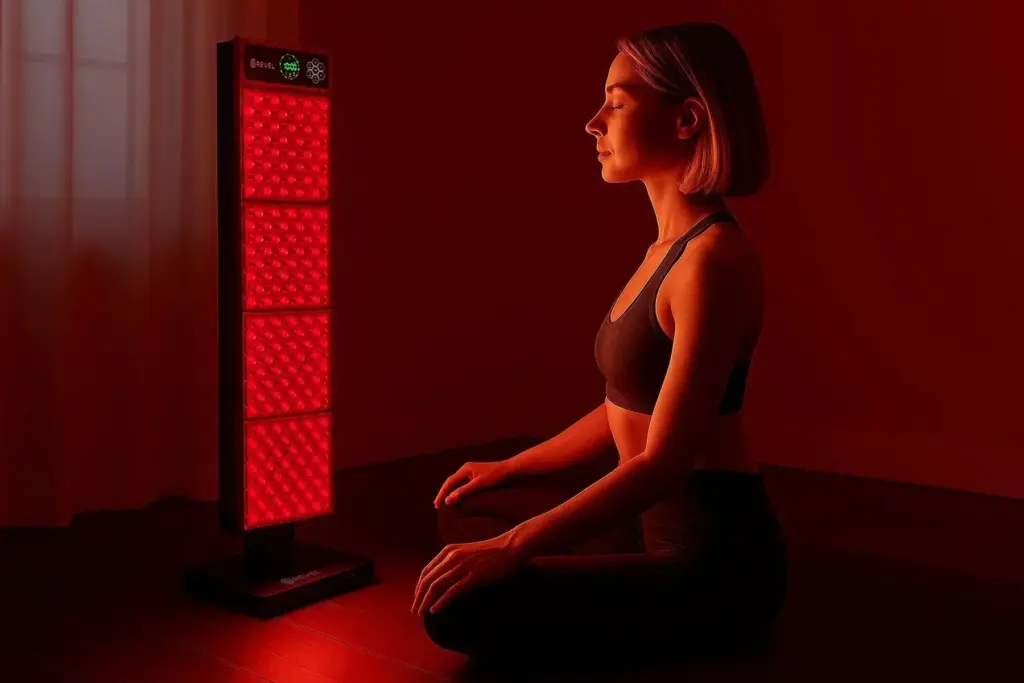
How Do Red and Near-Infrared Light Differ?
Red light, most commonly 630–660 nm, affects superficial tissues more strongly because it is more readily absorbed by melanin, hemoglobin, and skin chromophores. For this reason, it is often used in studies of skin texture, redness, wound healing, and collagen synthesis. In addition, red light therapy for hair is being studied increasingly often with the aim of stimulating follicle cell activity. Its effect is not merely cosmetic: cells of the epidermis and dermis can alter cytokine, growth factor, and oxidative stress signals.
Near-infrared light, especially 810–850 nm, penetrates deeper because it scatters less in the superficial layers. It is more often associated with muscles, tendons, joints, and nervous tissue. Nevertheless, “deeper” does not automatically mean “stronger” — some of the energy is still lost in the tissues, so dose and illumination area become very important. Researchers, including Michael Hamblin, emphasize that red and infrared light often work best not as competitors, but as different layers of a biological signal.
Skin, Muscle, and Joint Responses According to Research Data
In skin studies, especially when red light therapy is performed for the face, red light is most often associated with fibroblast activity, the synthesis of collagen I and III, and lower levels of inflammatory cytokines. Clinical studies show moderate improvements in wrinkle depth, skin elasticity, and redness, but results depend on dose, treatment frequency, and the skin’s initial condition. Praveen Arany emphasizes that photobiomodulation is more like a regulatory stimulus than direct tissue “repair”.
In the muscle area, 810–850 nm light is more often studied before or after exercise. Some studies have recorded a smaller increase in creatine kinase, faster strength recovery, and less subjective pain. For joints, the data are interesting but inconsistent: studies of osteoarthritis and tendinopathies show reduced pain and improved function, but the effect is strongest when light is combined with movement therapy rather than used as a standalone solution.

When May Red Light Therapy Be Unsuitable?
Red light therapy is not a universal procedure, especially when an active process of unclear origin is taking place in the tissue. Caution is needed in cases of suspected or active tumors, because photobiomodulation can stimulate cellular metabolism and vascular signals. Although clinical data in this area are not definitive, researchers such as Michael Hamblin emphasize the importance of context: what helps damaged tissue heal is not necessarily appropriate for uncontrolled proliferation.
It is worth postponing the procedure when taking photosensitizing medications, during active skin infections, after aggressive dermatological procedures, or in the presence of a high fever. Eye protection is essential, especially when using near-infrared light, because it is invisible and does not trigger the usual blink reflex. In cases of pregnancy, epilepsy, autoimmune flare-ups, or implanted medical devices, the decision should be made by a physician, taking into account not only the light dose but also overall biological sensitivity.
Red and near-infrared light therapy is best understood as a dosed biological signal, whose effect is determined by wavelength, energy density, tissue depth, and individual condition. The work of Michael Hamblin and Praveen Arany helps explain why the same devices can produce different results: mitochondrial response, inflammation level, blood flow, and even the distance during the session alter the final effect. Therefore, the most practical approach is not to look for the “strongest” lamp, but to choose clear parameters, observe the tissue response, and use light as an adjunct alongside movement, skin care, or medical treatment when there is a justified need for it.